I remember testing salsa verde pepper jack chicken on a blustery spring evening and worrying the acid in the salsa verde would toughen the breasts—so I adjusted the marinade time and added a short rest before hitting the grill. The result was a juicy, slightly tangy grilled chicken with just-melted pepper jack that smelled of char and cilantro; I knew right away this version would be a dependable warm-weather main.
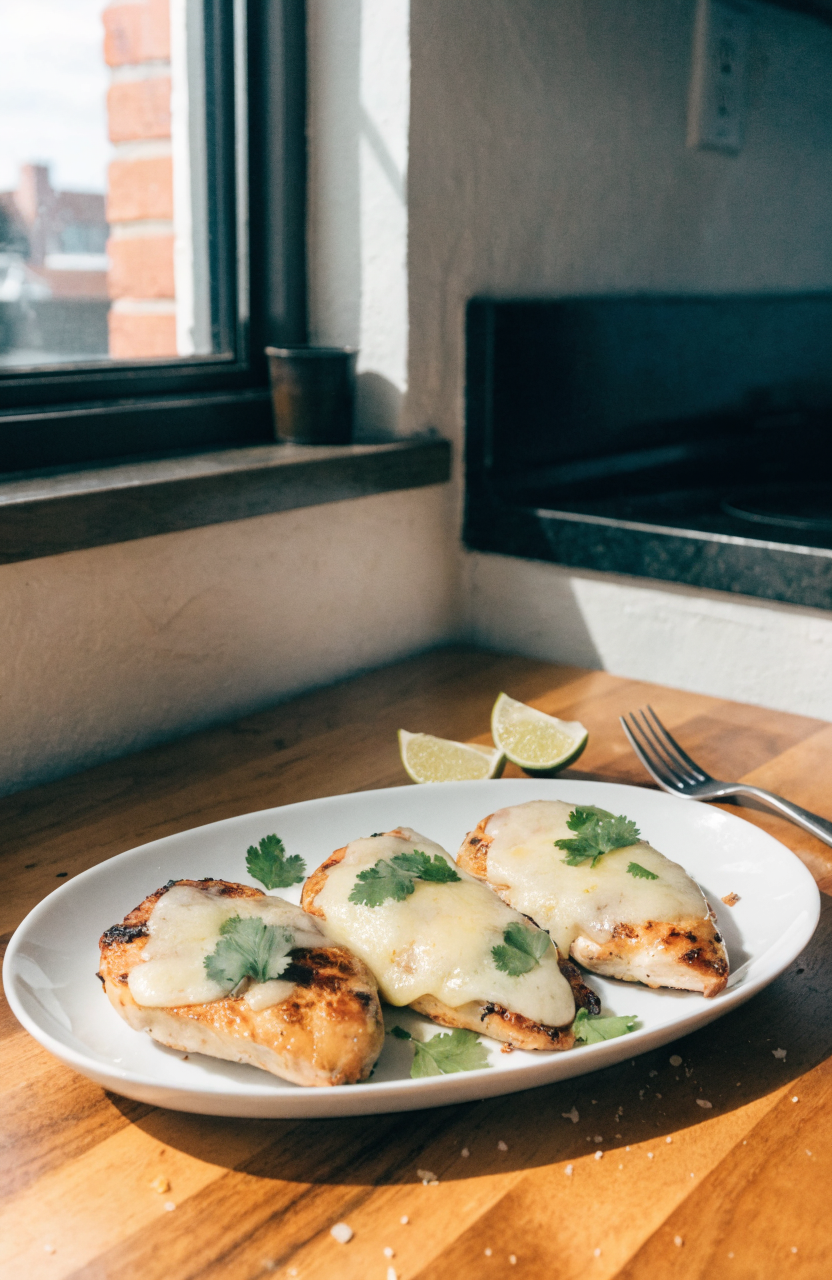
Why this salsa verde pepper jack chicken works
The trick is the marinade ratio: equal parts salsa verde and oil with a touch of honey to balance acidity, plus a short, controlled marinating time so the chicken soaks up flavor without becoming dense. I use boneless skinless chicken breasts for quick, even grilling and finish them with pepper jack while covered so the cheese melts without overcooking the meat. This method solves two common grilling problems—dry chicken and cheese that slides off—by using a modest heat, direct grilling for sear with a few minutes of indirect heat, then a five-minute tented rest to let juices redistribute.
Key takeaways
- Marinate up to 2 hours to add flavor without toughening the meat.
- Start on high heat for a sear, then move to medium to finish for even doneness.
- Rest the chicken 5 minutes after grilling and tent with foil to keep the pepper jack soft and melty.
Ingredients you’ll need and what to substitute
You only need a handful of pantry staples: jarred or homemade salsa verde, neutral oil, fresh lime juice, garlic, and a touch of honey. Salsa verde provides tang and herb flavor—if you prefer a milder profile, use tomatillo salsa labeled “mild.” I use neutral oil because it helps the marinade coat the chicken without adding competing flavor; olive oil is fine but gives a more pronounced fruitiness. Pepper jack gives a buttery melt with a little heat; Monterey Jack is a mellow substitute if you want less spice, and a thin slice of cheddar will work but won’t melt as smoothly.
If you only have bone-in chicken, reduce grilling time per side and expect a slightly longer finish; always use a meat thermometer and aim for 165°F internal temperature. For a dairy-free option, omit the cheese and top grilled chicken with sliced avocado and a drizzle of extra salsa verde.
Equipment
You’ll want a medium-hot grill (gas or charcoal) with a clean grate, a kitchen instant-read thermometer, and a rimmed sheet pan or platter for resting the chicken. A grill basket is unnecessary for this recipe, but a heavy-duty pair of tongs and a heatproof spatula help with turning. If you don’t own an outdoor grill, a 12-inch cast-iron skillet on the stovetop or a grill pan provides a good sear—finish in a 400°F oven for a few minutes until done.
How to make salsa verde pepper jack chicken
Prepare the marinade and chicken
Pat 1 1/2 pounds of boneless skinless chicken breasts dry and pound to an even thickness (about 3/4 inch) if needed for consistent cooking. In a bowl, whisk together 3/4 cup salsa verde, 1/4 cup neutral oil, 1 tablespoon lime juice, 1 tablespoon honey, 2 minced garlic cloves, 1/2 teaspoon ground cumin, and 1/2 teaspoon kosher salt. Coat the chicken in the marinade, cover, and refrigerate for 30 minutes to 2 hours; I rarely marinate longer than 2 hours because the tomatillo acidity will begin to firm the meat.
Grill and finish with pepper jack
Preheat your grill to medium-high (about 450°F) and oil the grates. Remove the chicken from the refrigerator 15 minutes before grilling to take the chill off. Shake off excess marinade—too much dripping marinade will flare up and char the outside. Place chicken directly over the hottest part of the grill and sear 2 to 3 minutes per side until you have good cross-hatch marks. Move chicken to a slightly cooler zone or turn the heat down to medium (about 350°F) and cook another 4 to 6 minutes, flipping once; target an internal temperature of 160°F so carryover cooking brings it to 165°F as it rests.
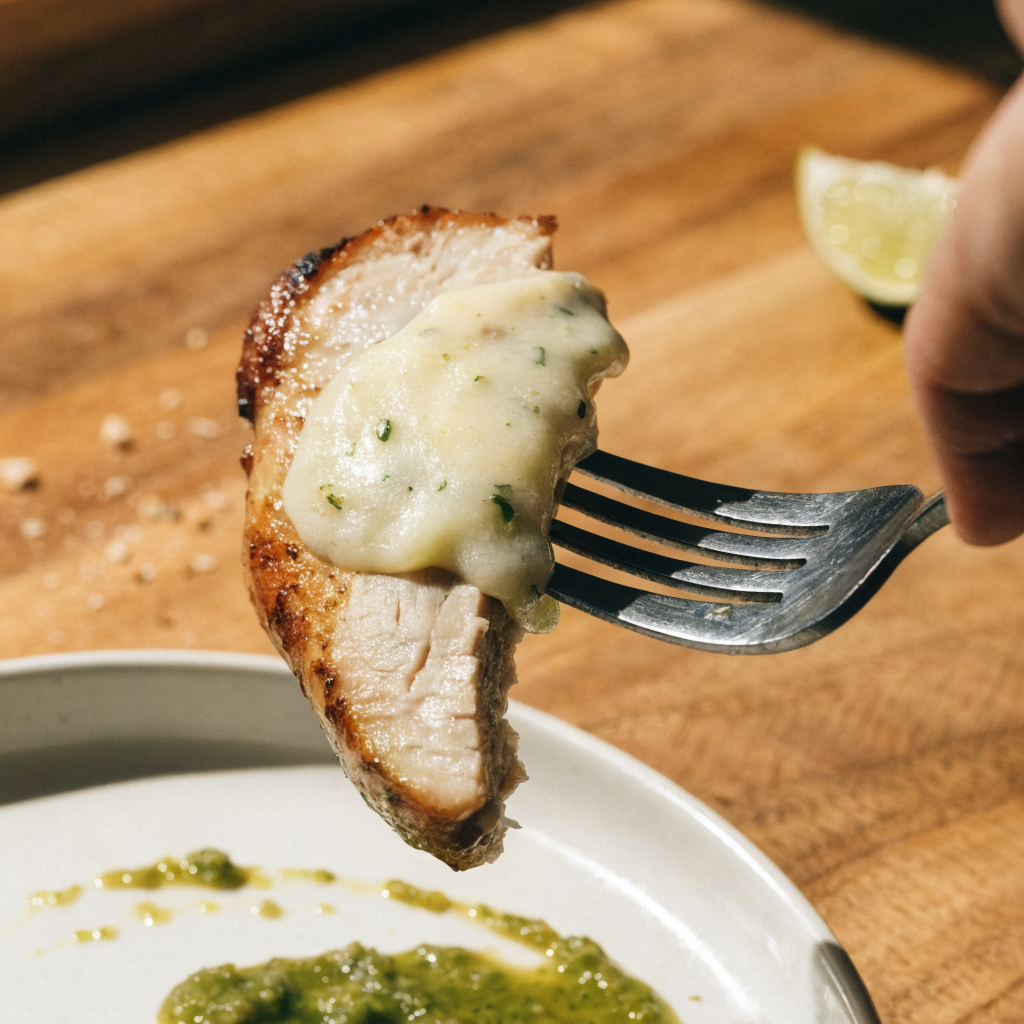
When chicken reaches 160°F, place a slice (about 1 ounce) of pepper jack on each breast, close the grill lid, and let the cheese melt for 1 to 2 minutes. If you left the grill lid open while searing, you can tent a sheet pan over the breasts for a minute to melt the cheese without heat loss. Remove the chicken to a platter, tent loosely with foil, and let rest 5 minutes. Resting is the part that makes the meat juicier; cut too soon and the juices run out onto the plate.
Things I learned the hard way
- If you marinate overnight the chicken can firm up; keep the marinating window at 30–120 minutes for breasts. The first version I tested was left overnight and became tighter—reducing the time fixed it.
- Don’t rely on grill time alone; use an instant-read thermometer. Thickness varies and visual cues can mislead.
- Too much residual marinade causes flare-ups; shake off excess before searing to avoid char that tastes bitter.
- Placing cheese on too-rare chicken forces you to leave it back on the heat and risk overcooking; bring chicken to about 160°F first, then add cheese.
- For even cooking, pound uneven breasts to a uniform thickness instead of guessing—this saves time and prevents a dry edge.
Variations to try
- Grilled Salsa Verde Chicken Thighs: Use boneless skinless thighs, marinate 1–3 hours, and expect 3–4 minutes per side on medium-high plus 4–6 minutes to finish; thighs stay forgiving and need less resting time.
- Cilantro-Lime Pepper Jack: Stir 2 tablespoons chopped cilantro and 1 teaspoon lime zest into the marinade for an herby lift; reduce salt if your salsa verde is salty.
- Smoky Roasted Salsa Verde: Add 1/2 teaspoon smoked paprika to the marinade for a smoky note that pairs well with the char from a charcoal grill; no timing change necessary.
- Sheet-Pan Option: Sear breasts in a hot cast-iron skillet for 2 minutes per side, then transfer to a 400°F oven for 6–8 minutes and top with pepper jack, broiling briefly to melt.
Small-batch service tips
For a small family meal, slice each breast crosswise after the 5-minute rest and arrange the slices on warm tortillas for easy assembly at the table. If you want to turn this into a build-your-own platter, provide warmed tortillas, a bowl of extra salsa verde, chopped cilantro, lime wedges, and a simple shredded cabbage slaw so everyone can customize heat and texture. These finishing steps take only minutes and make the grilled chicken stretch farther without changing the cooking method.
Storage, freezing, and reheating
Refrigerate leftover grilled salsa verde pepper jack chicken in an airtight container up to 3–4 days. To reheat, preheat the oven to 325°F, place slices on a baking sheet, cover loosely with foil, and warm for 10–12 minutes or until 165°F. This gentle method helps preserve juiciness and keeps the pepper jack soft. I don’t recommend freezing the cooked cheese-topped chicken because the cheese texture changes after freezing; if you want to freeze, freeze plain grilled chicken breasts (no cheese) wrapped tightly for up to 3 months and thaw overnight in the fridge before reheating and adding fresh pepper jack.
What to serve with salsa verde pepper jack chicken
This chicken pairs naturally with warm tortillas and a simple corn-and-black-bean salad, cilantro-lime rice, or grilled vegetables. For a lighter plate, serve it over a crisp romaine-and-avocado salad with a squeeze of lime. For family dinners, roasted sweet potatoes and a quick slaw make it an easy weeknight pairing.
Grilled Salsa Verde Pepper Jack Chicken
Ingredients
Equipment
Method
- Pat the chicken breasts dry and, if very uneven, pound to an even thickness of about 3/4 inch for uniform cooking.
- In a medium bowl whisk together salsa verde, oil, lime juice, honey, minced garlic, cumin, salt, and pepper until combined.
- Place chicken in a resealable bag or shallow dish and pour the marinade over it, turning to coat; refrigerate for 30 minutes to 2 hours.
- Preheat the grill to medium-high (about 450°F) and oil the grates; remove chicken from fridge 15 minutes before grilling and shake off excess marinade.
- Sear chicken directly over the hottest part of the grill 2 to 3 minutes per side to develop grill marks.
- Move the chicken to a slightly cooler zone (or reduce heat to medium, about 350°F) and continue cooking 4 to 6 minutes, flipping once, until the internal temperature reaches about 160°F.
- Place a slice of pepper jack on each breast, close the grill lid, and let cheese melt 1 to 2 minutes.
- Remove chicken to a platter, tent loosely with foil, and rest 5 minutes until temperature reaches 165°F, then serve garnished with cilantro and lime wedges.
- Heat a 12-inch cast-iron skillet over medium-high heat with 1 tablespoon oil and sear chicken 2 minutes per side, then transfer to a 400°F oven for 6–8 minutes until 160°F, add cheese, and broil 30–60 seconds to melt before resting.
Notes
Frequently asked questions
Can I marinate the chicken overnight? I don’t recommend it for breasts; marinate up to 2 hours to avoid a firmer texture from the tomatillo acidity. For thighs, you can extend to 6–8 hours.
What internal temperature should grilled chicken reach? Cook to 165°F for safety; remove the chicken at about 160°F before adding cheese and resting so carryover reaches 165°F during the 5-minute rest.
How can I melt cheese without overcooking the chicken? Bring the chicken to about 160°F, add the pepper jack, and close the grill lid or tent with foil for 1–2 minutes to melt without additional direct heat.
Can I use store-bought salsa verde? Yes—store-bought salsa verde works fine; choose a mild or medium heat level based on preference and taste the jar to judge saltiness before seasoning the marinade.
What if my cheese slides off while grilling? That usually means the cheese was added too early; add pepper jack when chicken is 160°F, then close the lid briefly so it melts without extra direct heat.
Is this safe for children who don’t like spicy food? Yes—pepper jack varies in heat; use mild pepper jack or substitute Monterey Jack to keep the flavor without the spice.
Closing
This salsa verde pepper jack chicken gives you reliably juicy grilled chicken with bright tomatillo flavor and a gentle peppery finish; after a few tests I learned to keep the marinate short and rest the meat, and that small adjustments make a big difference in texture. Serve it with simple sides, save leftovers for lunches, and when reheating add fresh pepper jack at the end if desired to revive the melted-cheese experience.

Leave a Reply