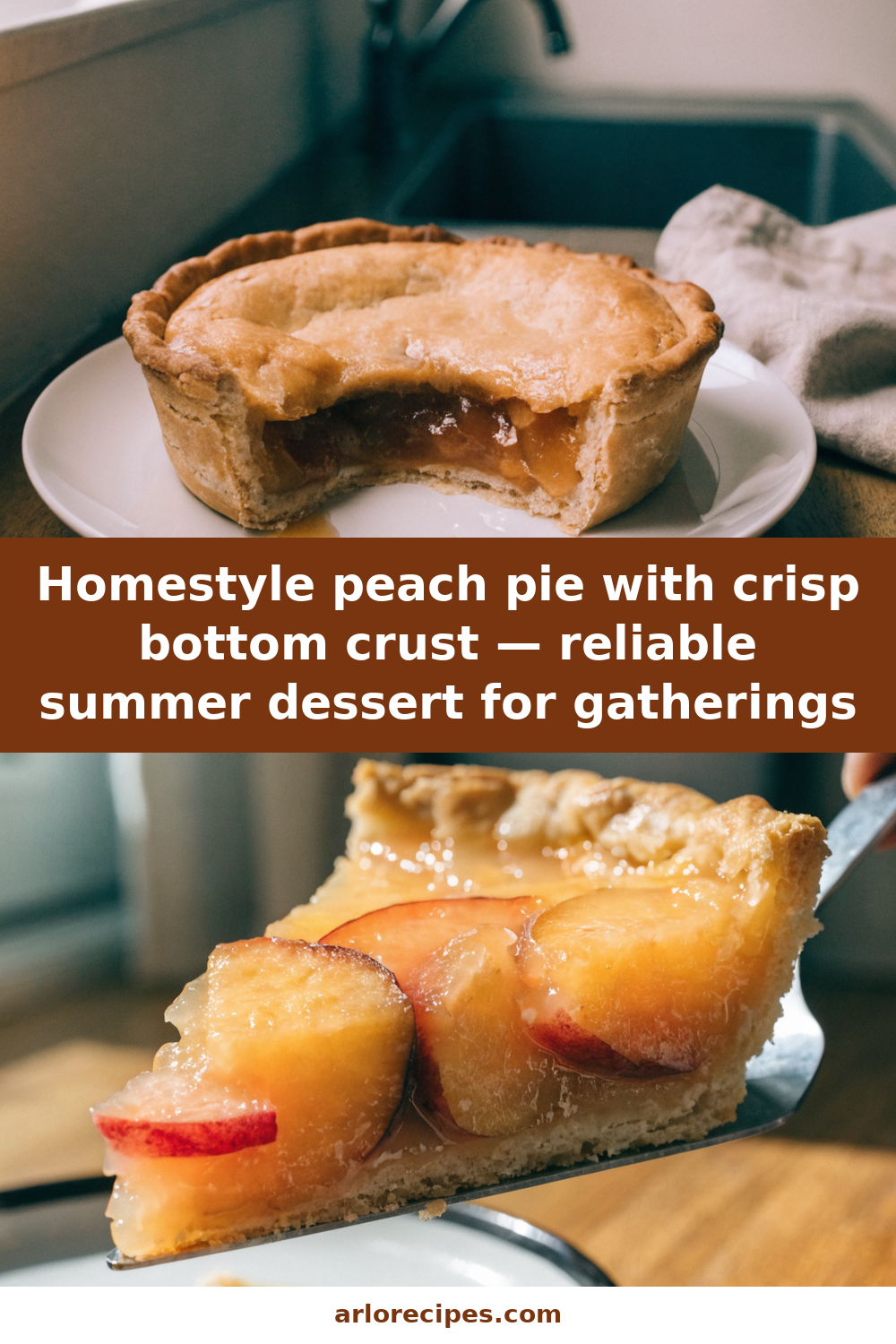
I remember the first time I tried to make a warm pie: the filling ran out the sides and the crust turned soggy before the center set. That’s why I developed this peach pie method that starts with a short maceration of ripe peaches and a mix of cornstarch and quick-cook tapioca to lock in juices; the finished pie sings with fresh fruit flavor and the crust stays crisp. Read on for the practical tweaks I rely on to get a dependable, homestyle peach pie with bright flavor and a flaky bottom crust.
Why this peach pie works
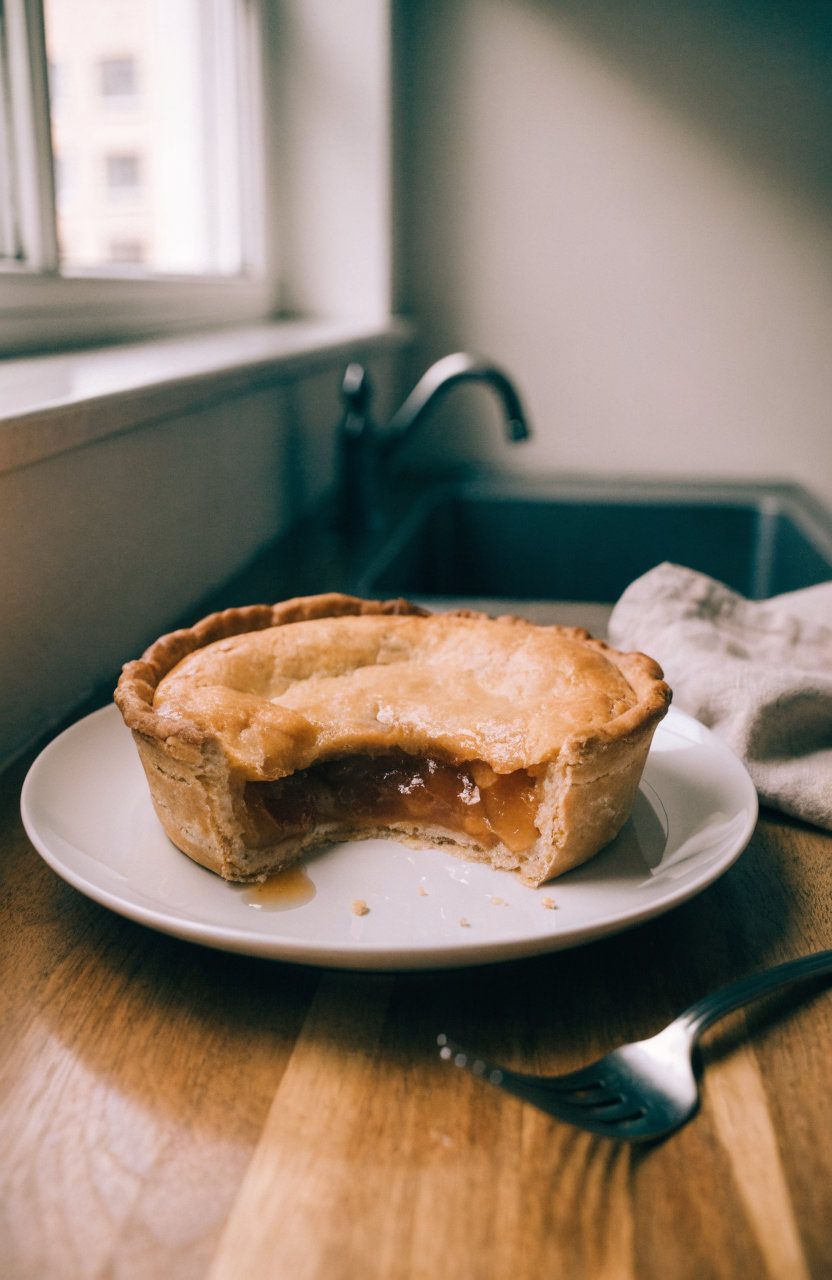
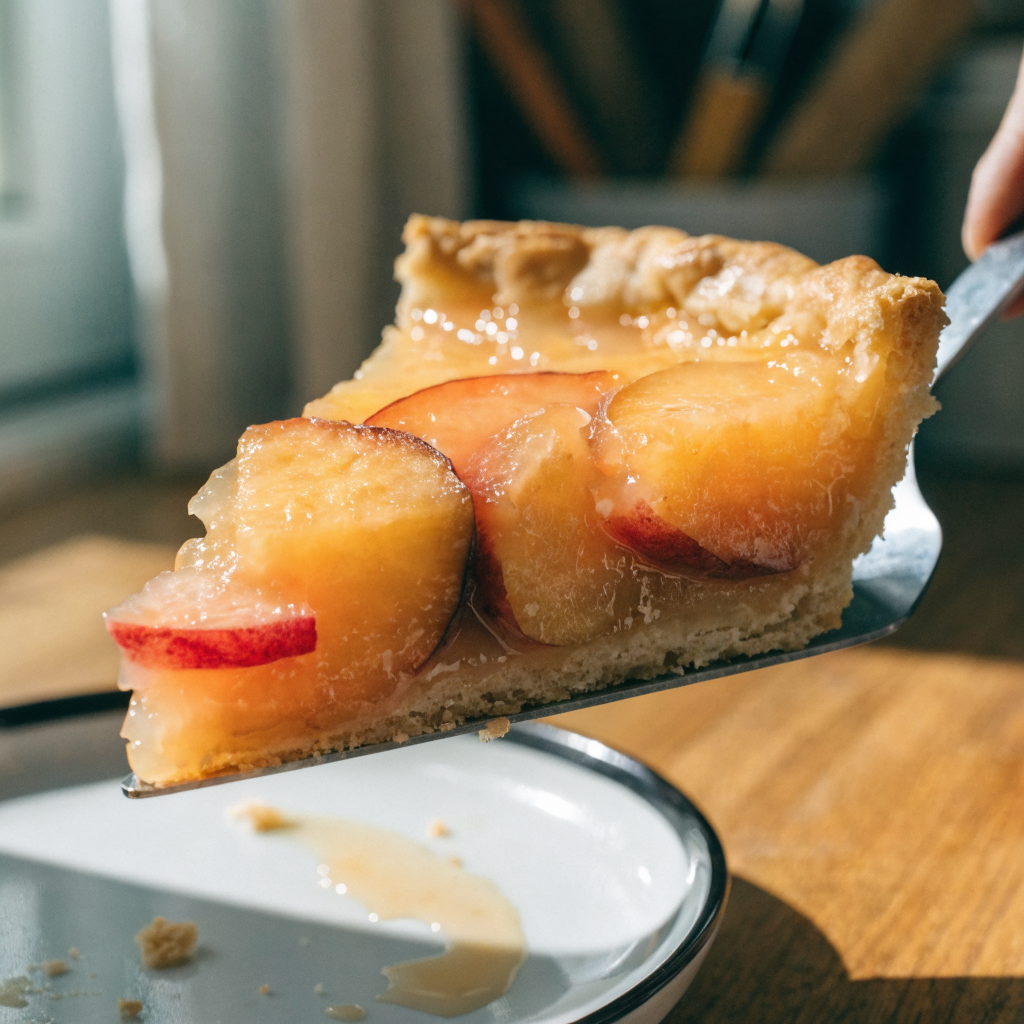
The key technique is a two-part approach: macerate the peaches briefly to concentrate flavor and remove excess juice, then stabilize the syrup with a small amount of cornstarch plus quick-cook tapioca for a clear, glossy filling that firms as it cools. During testing I first used only cornstarch and found the filling was slightly gummy once cooled; adding a tablespoon of quick-cook tapioca gave a clearer consistency and better mouthfeel without cloudiness. I also partially blind-bake the bottom crust so the base stays crisp under the syrupy fruit, which solves the common soggy-bottom problem. The final recipe balances sugar and lemon so the natural peach sweetness is front and center while the crust remains lightly flavored and flaky.
Key takeaways
- Short maceration concentrates peach flavor and reduces excess juice.
- A cornstarch + quick-cook tapioca mix gives a glossy, set filling without gummy texture.
- Partially blind-baking the bottom crust prevents a soggy pie base and improves flakiness.
Ingredients you’ll need and what to substitute
For the best results use ripe, but still slightly firm peaches—ones that give a bit when pressed avoid an overly mealy texture. I call for a mix of granulated sugar and a touch of brown sugar to round out caramel notes; if your peaches are very sweet, reduce the granulated sugar by 1/4 cup. The fruit thickener combines 2 tablespoons cornstarch with 1 tablespoon quick-cook tapioca; if you can’t find quick-cook tapioca, increase cornstarch to 3 tablespoons but be aware the filling will be more opaque and slightly less glossy. Lemon juice brightens the peaches and helps control sweetness; apple juice is a weaker swap but works in a pinch. Use cold unsalted butter for the crust; if using salted butter, omit the extra pinch of salt in the crust recipe.
Equipment
You don’t need anything fancy to make this pie, but a few items make the process reliable.
- 9-inch pie dish (glass or metal)
- 9- or 10-inch rolling surface and rolling pin
- Baking sheet to catch spills and help with even bottom browning
- Pie weights or dried beans for partial blind-baking (you can improvise with an extra sheet pan)
- Large mixing bowl and a small saucepan
How to make peach pie
Prepare the peaches
Start by peeling and slicing the peaches. For easy peeling, score an X at the bottom of each peach, plunge into boiling water for 20–30 seconds, then transfer to an ice bath; the skins will slip off. Slice peaches into 1/3- to 1/2-inch wedges and place them in a large bowl. Add 1/3 cup granulated sugar, 1 tablespoon brown sugar, 1 tablespoon lemon juice, and 1 teaspoon vanilla extract; toss gently to coat. Let the peaches macerate for 20–30 minutes, which draws out some juice and intensifies flavor. After macerating, transfer peaches and accumulated juices into a sieve set over a bowl and let drain for 10 minutes; reserve the juices for the filling sauce step.
Make the filling
In a small bowl, whisk together 2 tablespoons cornstarch, 1 tablespoon quick-cook tapioca, 1/2 teaspoon ground cinnamon, 1/8 teaspoon ground nutmeg, and a pinch of salt. In a medium saucepan combine the reserved peach juices (about 1/3 to 1/2 cup), 1/4 cup water if needed to reach 1/2 cup total liquid, and the dry thickener mixture. Cook over medium heat, whisking constantly, until it comes to a gentle boil and thickens—about 2 minutes. Remove from the heat and stir in an additional 2 tablespoons butter for gloss. Toss the thickened syrup with the drained peach slices and let cool slightly while you prepare the crust.
Prepare and partially blind-bake the crust
Use your favorite double-crust pie dough or the simple recipe in the ingredient list. Roll the bottom crust into a 12-inch circle and fit it into a 9-inch pie dish, letting it rest chilled for 15 minutes to prevent shrinkage. Line the crust with parchment, add pie weights or dried beans, and bake at 375°F for 12 minutes to set the bottom. Remove the weights and parchment and bake another 5 minutes until the surface shows tiny blisters but not full browning. This step protects the base from soaking up filling juices.
Assemble and bake
Preheat the oven to 400°F. Spoon the peach filling into the partially baked crust, mounding slightly in the center. Roll the top crust to a 10–11-inch circle and place over the filling; trim and crimp the edges, and cut a few vents for steam. Brush the top with an egg wash (1 beaten egg with 1 tablespoon water) and sprinkle 1 tablespoon coarse sugar if desired. Place the pie on a baking sheet and bake at 400°F for 20 minutes, then reduce the oven to 375°F and bake another 25–30 minutes until the crust is golden and bubbling through the vents. If the edges brown too quickly, shield them with foil after 25 minutes. For safety, the filling will bubble hot—allow the pie to cool at least 2 hours before slicing so the filling sets.
Things I learned the hard way
Here are the practical lessons I picked up while refining this recipe.
- Don’t skip the maceration—fruit that goes straight into the pie waters down the filling quickly. A 20–30 minute maceration concentrates flavor and lets you drain excess juices.
- Using only cornstarch gave a gummy texture once cold; adding a tablespoon of quick-cook tapioca made the set clearer and more spoonable.
- Partially blind-baking protects the bottom crust. The first version I made without it had a soggy base after an hour; blind-baking fixed that.
- Let the pie cool for at least 2 hours before slicing. Cutting early causes the filling to run because the starch needs time to gel.
- If your peaches are very juicy, drain them longer and reduce the added sugar by 1/4 cup to avoid an overly sweet syrup.
- One early failure was overfilling the pie; leave a small gap at the rim to prevent spillover and reduce oven clean-up.
Variations to try
These small changes let you adapt the pie to what you have on hand or to different flavor directions.
- Peach-Berry Mix: Replace 1 to 1 1/2 cups peaches with fresh blueberries; add 1 tablespoon lemon zest and reduce the added sugar by 2 tablespoons. Bake the same time.
- Cinnamon Streusel Top: Omit the top crust and sprinkle a streusel made with 1/2 cup flour, 1/3 cup brown sugar, 1/3 cup cold butter, and 1 teaspoon cinnamon; bake about the same time but watch the center for doneness.
- Gluten-Free Dough: Use a store-bought 9-inch gluten-free pie crust and follow the same blind-bake timing but watch for quicker browning; tent with foil if needed.
- Grilled Peaches: For a subtle smoky note, lightly grill peach halves until marked, cool, then slice and use as directed; the sugars caramelize slightly, so reduce overall baking time by 5–8 minutes and watch for bubbling.
Storage, freezing, and reheating
Store leftover pie covered loosely at room temperature for up to 2 days for best texture; refrigeration will extend life to 4 days but may slightly soften the crust. For refrigerator storage, cover the pie with a sheet of foil and then plastic wrap to protect from odors. To freeze, fully cool the baked pie, wrap tightly in plastic wrap and foil, and freeze for up to 2 months. Thaw overnight in the refrigerator and refresh the crust in a 350°F oven for 10–12 minutes to crisp the edges. To reheat individual slices, warm at 300°F for 8–12 minutes or microwave for 30–45 seconds on medium power, but the oven method preserves flakiness better. Expect the filling to soften a bit after refrigeration; a quick warm-up restores some of the original texture.
What to serve with peach pie
The pie is at home with simple, familiar accompaniments.
- Vanilla ice cream for a classic contrast of warm filling and cold creaminess.
- Whipped cream lightly sweetened with a splash of vanilla.
- A crisp cup of black tea or a milky coffee for afternoon gatherings.
- For a brunch twist, serve slices with lightly toasted almonds and plain Greek yogurt.
Frequently asked questions
Can I use canned peaches? Yes—use one 29-ounce can of sliced peaches, drain thoroughly, and reduce added sugar by 1/4 cup since canned fruit is sweeter; skip the maceration step.
How do I know when the pie is done? The crust should be golden and the filling should be bubbling visibly through the vents or slits; bubbles indicate the filling reached boiling and the starches activated. After baking, let the pie cool 2 hours to fully set.
Can I make the pie ahead? You can assemble the pie up to the point of baking and refrigerate for a few hours; bring it to room temperature for 30 minutes before baking and add a few extra minutes to the baking time if needed.
Why did my filling become runny? Common causes are under-thickening (not enough starch), using overly ripe peaches without draining, or cutting the pie too soon. Make sure you macerate and drain, use the combined thickener, and cool the pie before slicing.
Can I double the recipe? Yes—make two pies or bake the second in a deep-dish 9-inch for a larger filling-to-crust ratio, but rotate pies halfway through baking if your oven can only hold one rack level at a time.
Closing
This peach pie brings bright, true peach flavor with a sturdy, flaky crust thanks to the maceration, partial blind-bake, and the cornstarch-tapioca trick; it’s the kind of reliable dessert to bring to a weekend supper or summer gathering and it will reward the cooling time with a perfectly set filling.




Leave a Reply