
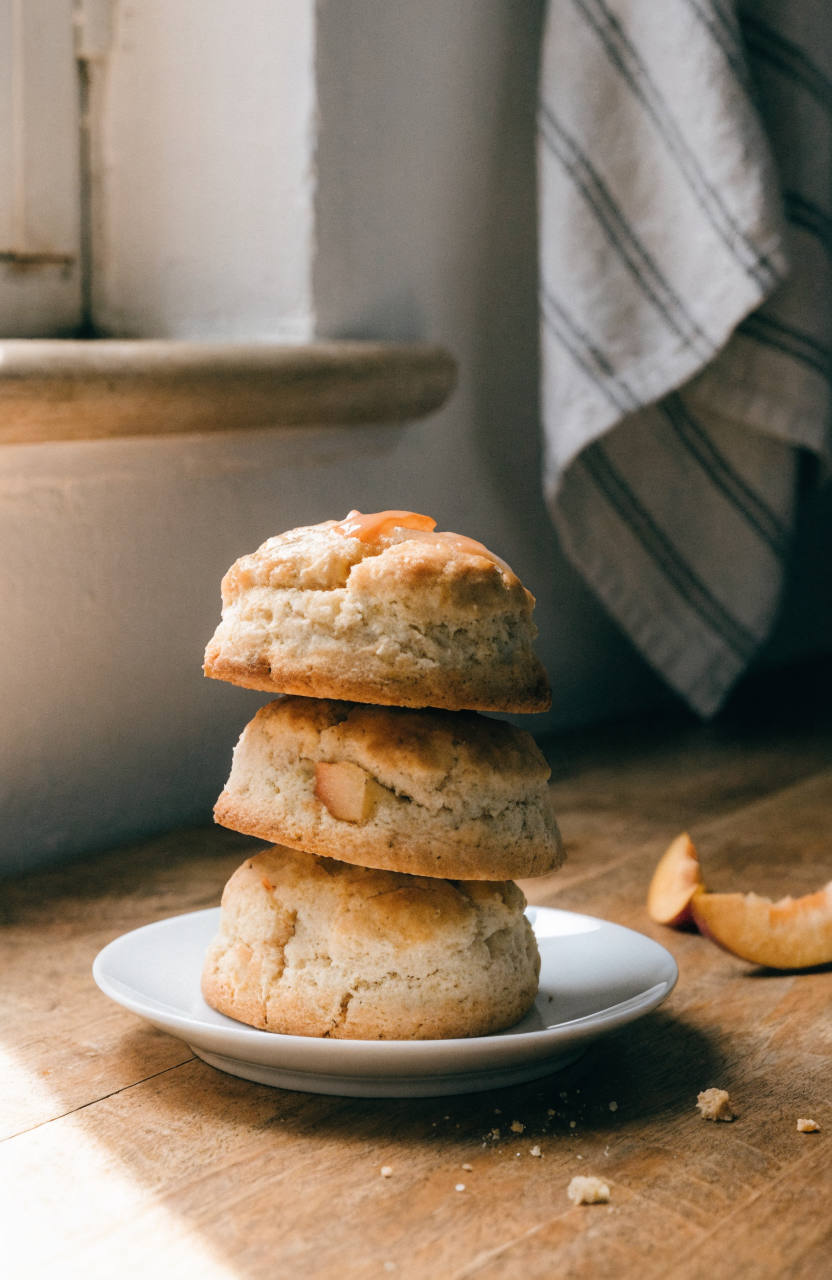
On a humid summer morning I wanted scones that tasted like ripe peaches without turning soggy, so I developed a Peach Scones recipe that keeps the fruit bright and the dough flaky. These peach scones are what I reach for when I want a buttery, tender pastry with just the right amount of peach, finished in a honey-vanilla glaze.
The method—brief maceration, draining, and a quick chill—prevents watery pockets and encourages a soft crumb with a light exterior. Keep reading for practical timing, equipment notes, and troubleshooting so your batch comes out reliably well.
Why this peach scones recipe works
The core technique that makes these peach scones reliable is controlling fruit moisture and keeping the fat cold. Fresh peaches are juicy, and if you fold them into the dough raw you risk pockets of moisture that make the center gummy. I macerate the diced peaches briefly with a teaspoon of sugar, then drain and pat them nearly dry—this concentrates the flavor while preventing sogginess. The second critical move is using cold, cubed butter and a short chilling step after shaping; that preserves small pockets of butter that steam during baking and produce a flaky, layered texture.
In testing I also adjusted flour ratios to maintain tenderness: a modest increase in all-purpose flour plus a touch of heavy cream (instead of only milk) gives a richer crumb without heaviness. Finally, a thin honey-vanilla glaze brushed on while the scones are still slightly warm gives shine, gentle sweetness, and a soft crust that complements the peach pieces without overpowering them.
Key takeaways
- Briefly macerate and drain diced peaches to avoid soggy centers.
- Use cold, cubed butter and a short chill to create flaky layers.
- A small amount of heavy cream improves tenderness and browning.
Ingredients you’ll need and what to substitute
These peach scones rely on straightforward pantry staples plus fresh summer peaches. Use ripe but firm peaches—too soft and they’ll break down when diced. Here’s why certain ingredients matter and what you can swap:
- All-purpose flour: Provides structure. You can substitute up to 1/4 cup with whole wheat pastry flour for a nuttier flavor, but expect a denser crumb.
- Baking powder and baking soda: Leavening combination gives balanced rise and browning. Don’t skip or reduce them.
- Cold unsalted butter: Creates flaky layers. If using salted butter, omit added pinch of salt or reduce the salt by 1/4 teaspoon.
- Granulated sugar + light brown sugar: White sugar for sweetness and browning; a touch of brown adds depth. You can use all white sugar if you prefer.
- Heavy cream + milk: The cream adds tenderness and helps with browning; substitute the cream with full-fat yogurt or buttermilk if needed, but reduce oven temp by 10°F and watch for faster browning.
- Fresh peaches: Key flavor. Frozen peaches can be used when thawed and well-drained, but hand-diced fresh fruit gives the best texture.
- Honey and vanilla: For the glaze—use pure vanilla extract and mild honey. Maple syrup is a fine alternative for a different flavor note.
Equipment
You don’t need specialty tools, but a few items make this easier:
- Large rimmed baking sheet (half sheet or similar)
- Pastry cutter or two forks (or a stand mixer with paddle)
- Food scale (optional) or measuring cups for accuracy
- Mixing bowls, a bench scraper, and a 9- or 10-inch round for shaping
- Wire rack for cooling
If you don’t have a pastry cutter, cut the butter into cubes and use chilled fingers or two forks; work quickly so the butter stays cold.
How to make peach scones
Prepare the peaches
Start by peeling (optional) and dicing 1 cup of peaches into approximately 1/4-inch pieces. Toss them with 1 teaspoon of granulated sugar in a small bowl and let them sit for 10 minutes—this draws out a little juice and concentrates flavor. After 10 minutes, drain the peaches in a fine-mesh sieve and gently pat them dry with paper towels to remove excess moisture. Set aside in the refrigerator while you make the dough.
Make the dough
Preheat the oven to 400°F and line a rimmed baking sheet with parchment. In a large bowl, whisk together 2 1/2 cups all-purpose flour, 3 tablespoons granulated sugar, 1/4 cup light brown sugar (packed), 2 teaspoons baking powder, 1/2 teaspoon baking soda, and 1/2 teaspoon fine salt. Add 8 tablespoons (1 stick) cold unsalted butter, cut into 1/2-inch cubes. Using a pastry cutter or two forks, cut the butter into the flour until the mixture resembles coarse meal with some pea-sized butter bits remaining—these bits are what make the scones flaky.
In a separate bowl, whisk 1 large cold egg with 1/2 cup heavy cream and 1/4 cup cold whole milk and 1 teaspoon vanilla extract. Make a well in the dry ingredients and pour in the wet mixture; fold with a spatula until the dough begins to come together. Fold in the drained, chilled peaches gently—don’t overwork the dough. If the dough feels very dry, add up to 1 extra tablespoon of cream, one at a time.
Shape and chill
Turn the dough onto a lightly floured surface and gently pat it into a 9-inch round about 1-inch thick. Use a bench scraper to tidy the edge, then cut the round into 8 wedges. Transfer wedges to the prepared baking sheet, spacing them about 1 inch apart. Brush the tops lightly with a little heavy cream and sprinkle with a pinch of sugar if desired. Chill the scones in the refrigerator for 10–12 minutes—this quick chill firms up the butter and reduces spreading in the oven.
Bake and glaze
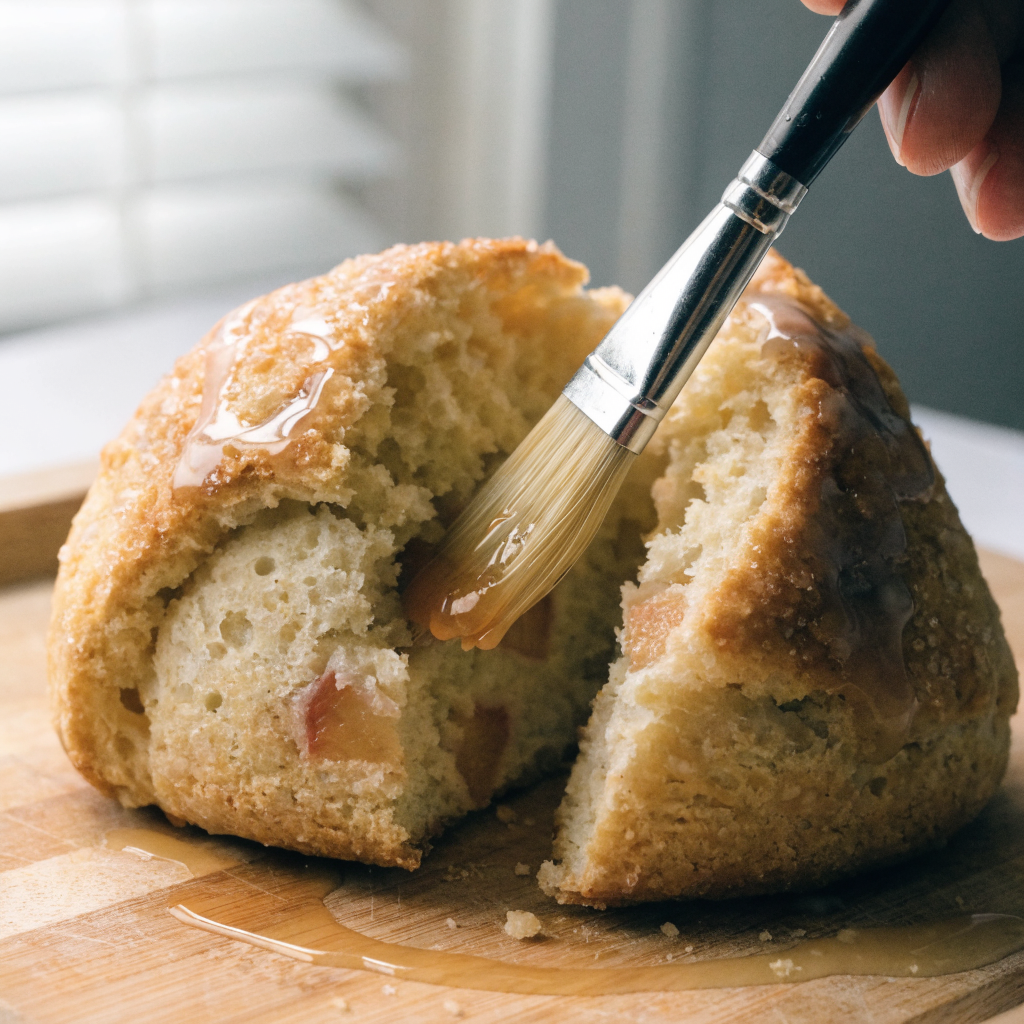
Bake at 400°F for 16–18 minutes, rotating the pan once after 9 minutes, until the scones are golden at the edges and a toothpick inserted near the center comes out mostly clean with a few moist crumbs. Remove the pan to a wire rack. While the scones rest for 5 minutes, whisk together 1/2 cup powdered sugar, 1 tablespoon honey, 1/2 teaspoon vanilla extract, and 1–2 teaspoons milk to reach a thin glaze consistency. Brush the warm scones with the thin glaze; it will set to a glossy finish.
Serve warm or at room temperature. The scones are best the day they’re baked, though they keep well with proper storage (see below).
Things I learned the hard way
- If you skip draining the peaches you get watery pockets—an unprepared fruit will make the centers gummy; draining fixes it.
- Using room-temperature butter makes a dense scone; keep butter cold and work quickly.
- Overmixing the dough causes tough scones—fold just until the dough holds together.
- Chilling for at least 10 minutes after shaping prevents excessive spreading while still keeping the bake short and tender.
- If your oven browns the tops too fast, tent the scones loosely with foil in the last 5 minutes and lower the temp to 375°F.
Variations to try
- Peach and almond: Add 1/4 teaspoon almond extract and 1/3 cup sliced almonds—toast the almonds lightly first for more crunch. No timing change required.
- Peach-blueberry: Fold in 1/3 cup fresh blueberries with the peaches; drain the peaches thoroughly and toss the berries in a little flour to prevent bleeding. Bake as directed, but watch for extra moisture.
- Glazed cinnamon: Swap the honey in the glaze for 2 teaspoons maple syrup and mix 1/2 teaspoon ground cinnamon into the powdered sugar.
Storage, freezing, and reheating
Store cooled scones in an airtight container at room temperature for up to 2 days. For longer storage, freeze baked scones on a tray until solid, then transfer them to a freezer bag for up to 2 months. To reheat from frozen, unwrap and place on a baking sheet at 325°F for 10–12 minutes until heated through; for refrigerated scones, 8 minutes at 325°F is usually enough. Microwaving gives a softer exterior but works for quick reheats—heat in 20-second bursts until warm.
Note: Glaze may soften during storage; for a fresh look, warm scones and whisk a little extra glaze to brush on before serving.
What to serve with peach scones
- Simple coffee or cold-brewed iced coffee for morning pairing.
- Plain yogurt with fresh berries for a lighter breakfast plate.
- Herbal iced tea or lemonade for a brunch spread.
- A smear of clotted cream or mascarpone for a richer treat.
Frequently asked questions
Can I use frozen peaches? Yes, but thaw and drain them thoroughly and pat dry—frozen fruit releases more water, so extra draining helps prevent soggy dough.
How do I keep the scones flaky instead of dense? Keep butter and liquids cold, cut the butter into pea-sized pieces, and avoid overmixing. A brief chill after shaping helps too.
Can I make the dough ahead? Yes. Shape the wedges, cover the baking sheet tightly, and refrigerate up to 24 hours. Bake directly from chilled, adding 1–2 minutes if needed. For longer storage, freeze unbaked wedges on a tray, then bag for up to 1 month; bake from frozen adding 4–6 minutes.
Why did my scones spread too much? Likely the butter warmed during mixing or the dough was overworked. Chill the shaped scones and handle the dough as little as possible.
Can I use a different glaze? Certainly—powdered sugar with lemon juice makes a bright contrast; maple or a thin cream cheese glaze are also good options.
Closing
These peach scones are a reliable choice when peaches are at their peak because the brief maceration and quick chill preserve bright fruit flavor and deliver a tender, layered crumb. Serve warm with coffee or tea, and reheat leftovers gently to refresh the glaze and texture for another morning.




Leave a Reply