
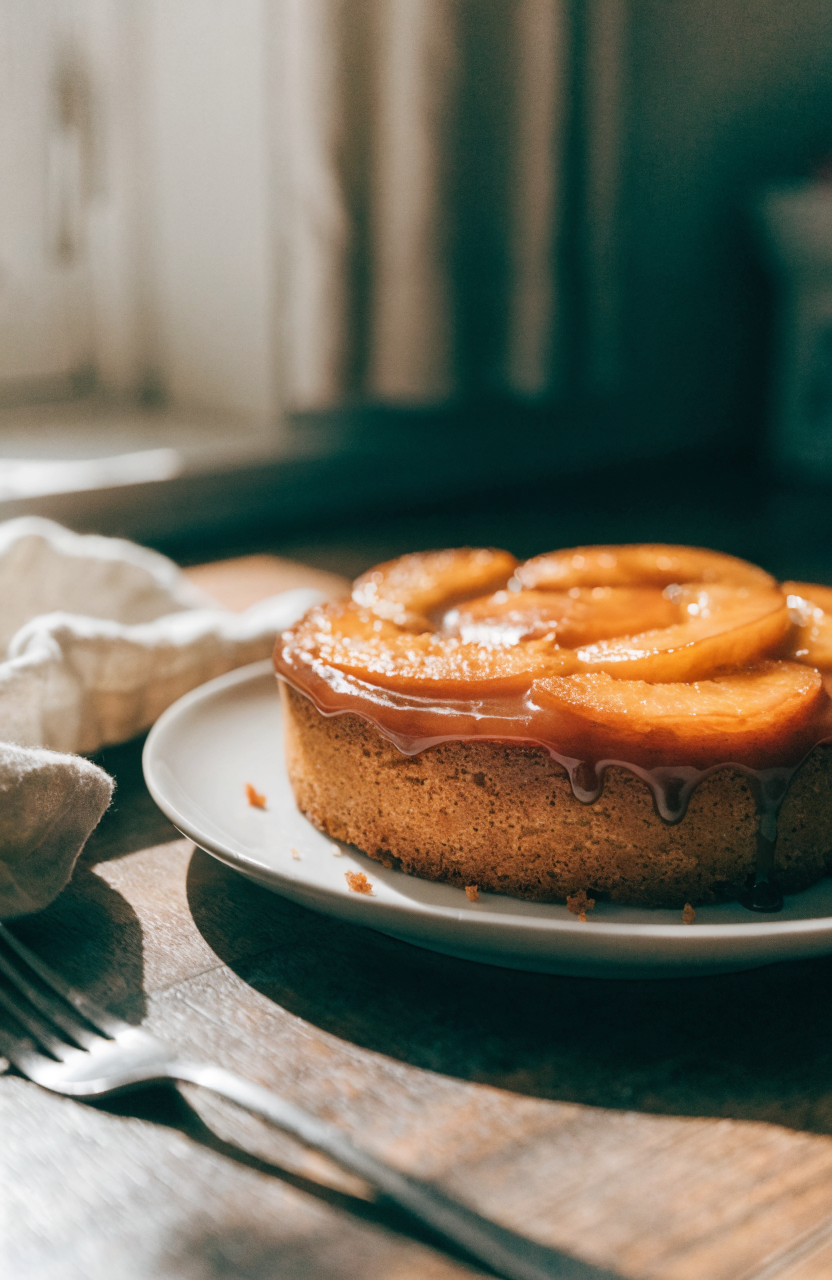
The first time I tried a peach upside-down cake I loved the idea but ended up with syrupy fruit that sank into a gummy layer. After a couple of tests I landed on a simple trick that keeps the peaches glossy but distinct: a short, thickened brown-sugar caramel and a slightly denser cake batter that bakes up around the fruit instead of swallowing it. This peach upside-down cake has a warm caramel top, tender crumb, and bright peach flavor—exactly what I reach for when friends drop by or when I want a comforting homemade dessert.
Why this peach upside-down cake works
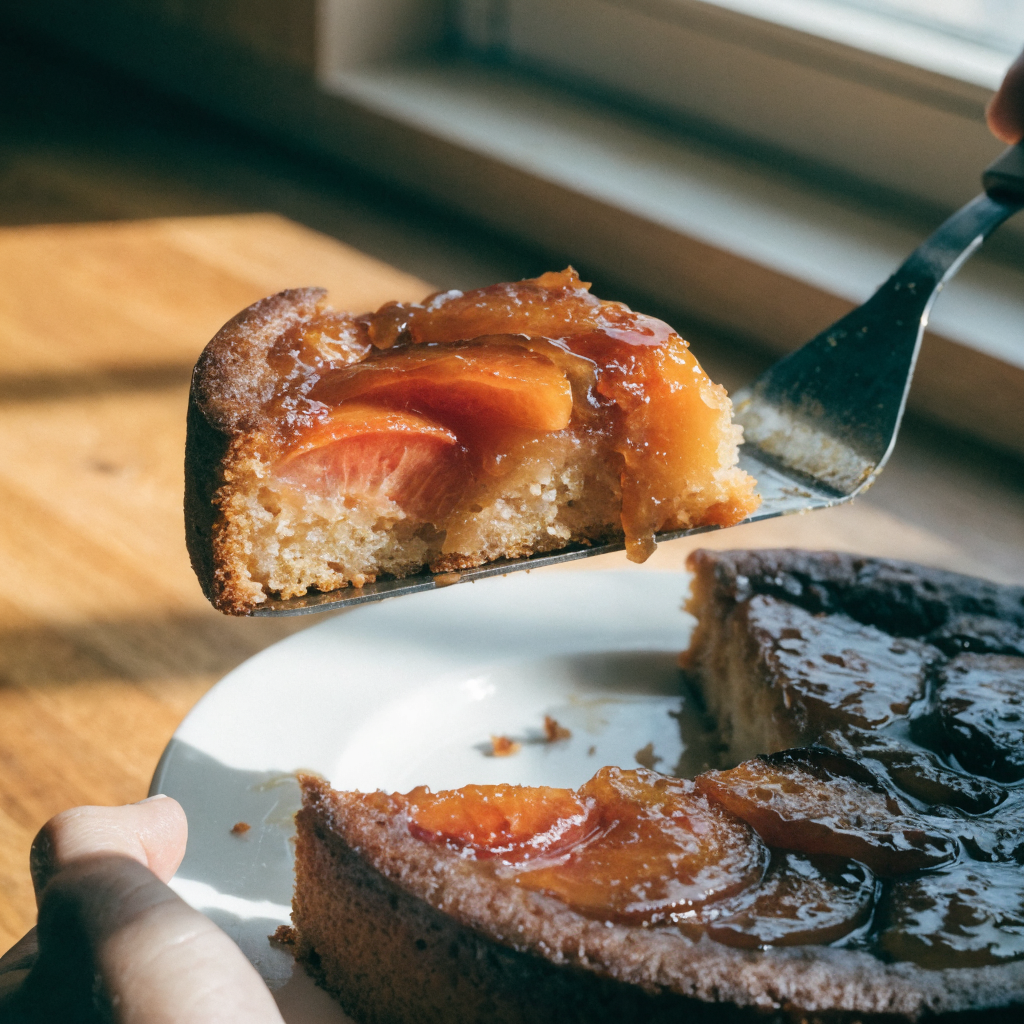
The key technique here is building a stable caramel layer and using a cake batter with enough structure to support the fruit without drying out. I use a modest amount of browned butter and a touch of sour cream to add moisture and richness without weakening the batter. When testing, the first version used straight melted butter and more canned peaches; the result was an overly wet underside. What made the difference was reducing the fruit juices by briefly macerating and draining the peach slices, then coating them in the caramel and arranging them tightly before pouring a slightly thicker batter over. That keeps the peaches glossy but prevents a soggy cake edge.
Key takeaways
- Short brown-sugar caramel seals fruit and prevents sogginess.
- Slightly denser, butter-and-sour-cream batter holds fruit without drying.
- Use ripe but firm peaches and briefly macerate to control juices.
Ingredients you’ll need and what to substitute
This recipe uses fresh peaches, brown sugar for the caramel, and a butter-forward cake batter with a little sour cream for moisture. Fresh peaches give the best texture and flavor; if unavailable, high-quality drained canned peaches in light syrup can work—reduce any added sugar and pat slices dry. I prefer light brown sugar for a milder caramel flavor; dark brown sugar will deepen the molasses note but can make the caramel slightly stickier. If you need a dairy swap, plain full-fat yogurt can replace sour cream (expect a marginally tangier crumb). Use unsalted butter so you can control salt; if you only have salted, omit the added 1/4 teaspoon salt listed in the recipe.
Equipment
Essential tools are a 9-inch round cake pan (or a 9×2-inch springform), a medium skillet for the caramel, and a mixing bowl (or stand mixer). A silicone spatula, a pastry brush for leveling the caramel if needed, and an instant-read thermometer are helpful but not required. If using a springform pan, line the bottom with parchment to make flipping easier.
How to make peach upside-down cake
Prepare the peaches and caramel
Start by peeling and slicing 3 to 4 medium ripe but firm peaches into 1/4-inch wedges. Toss the slices with 1 tablespoon lemon juice and 2 tablespoons granulated sugar and let them sit in a bowl for 10 to 15 minutes. This maceration softens the fruit and draws out some juice; then drain off any excess and pat the slices lightly with paper towels so they are not dripping. While the peaches rest, melt 4 tablespoons unsalted butter in a medium skillet over medium heat, add 1/3 cup packed light brown sugar, 1/4 teaspoon salt, and 1/2 teaspoon ground cinnamon, and cook, stirring, until the sugar dissolves and the mixture is bubbling and slightly thickened—about 2 to 3 minutes. Remove from heat and stir in 1/2 teaspoon vanilla.
Arrange and build
Pour the warm caramel into the bottom of a lightly buttered 9-inch round baking pan, using a spatula to level it into an even layer. Arrange the peach slices in a concentric pattern, overlapping slightly, covering as much of the caramel as possible. Set aside while you make the batter.
Make the cake batter
Preheat the oven to 350°F. In a small saucepan, brown 6 tablespoons unsalted butter over medium heat until it develops a nutty aroma and light brown flecks—about 4 to 5 minutes—then remove from heat and let cool 3 minutes. In a medium bowl whisk together 1 1/4 cups all-purpose flour, 1 1/2 teaspoons baking powder, and 1/4 teaspoon salt. In a separate large bowl, beat 2 large eggs with 3/4 cup granulated sugar until pale and slightly thick, about 2 minutes. Whisk in the cooled browned butter, 1/3 cup sour cream, and 1 teaspoon vanilla. Fold in the dry ingredients gently until just combined; the batter should be thicker than a typical sponge cake but still pourable. If it seems too stiff, add 1 tablespoon milk.
Bake and invert
Gently pour the batter over the arranged peaches, spreading carefully with a spatula to cover the fruit. Bake at 350°F for 38 to 45 minutes, rotating the pan once halfway through, until the top is golden and a toothpick inserted into the center comes out with a few moist crumbs. Let the cake cool in the pan on a wire rack for 10 minutes—this brief rest helps the caramel set slightly—then run a knife around the edge and invert onto a plate. If any peaches stick to the pan, lift them off and reposition on the cake. Cool another 10 minutes before slicing; the cake is best warm or at room temperature.
Things I learned the hard way
- Don’t skip draining the peaches: too much surface juice means a watery caramel and a soggy cake edge.
- Brown the butter carefully: burnt butter gives a bitter note; stop when it smells nutty and you see small brown flecks.
- Use a slightly thicker batter: originally I used a thinner batter and the peaches sank and bled into it—thicker batter holds the fruit and keeps texture contrast.
- Let it rest 10 minutes before flipping: flipping too soon smears hot caramel and can make the cake slide apart.
- If using canned peaches, pat them very dry and reduce the baking time by 3–5 minutes since they hold more liquid.
- One failed batch stuck badly to the pan; lining the pan bottom with parchment and greasing the sides fixed that problem.
Variations to try
- Ginger-brown sugar: add 1/2 teaspoon ground ginger to the caramel and 1/4 teaspoon to the batter for warm spice; no timing change needed.
- Almond-peach: stir 1/2 teaspoon almond extract into the batter and sprinkle 2 tablespoons sliced almonds over the caramel before arranging peaches; reduce any additional sugar if you prefer less sweetness.
- Mini cakes: make in three 6-inch pans; bake 25–30 minutes and check doneness earlier to avoid overbaking.
- Gluten-free: substitute a 1:1 gluten-free flour blend and add 1/4 teaspoon xanthan gum if your blend lacks it; bake times should be similar but monitor for doneness.
Storage, freezing, and reheating
Store leftover peach upside-down cake covered at room temperature for up to 2 days or in the refrigerator for up to 4 days. Keep in an airtight container or wrap the plate tightly with plastic wrap to protect the caramel topping. The cake can be frozen for up to 2 months: flash-freeze individual slices on a tray, then wrap tightly in plastic and place in a freezer bag. Thaw in the refrigerator overnight and rewarm gently in a 300°F oven for 10–12 minutes to refresh the caramel sheen—cover loosely with foil to avoid over-browning. Expect the crumb to firm slightly after refrigeration; a quick warm-up restores softness.
What to serve with peach upside-down cake
Serves well with a scoop of vanilla ice cream, lightly sweetened whipped cream, or a drizzle of heavy cream warmed with a teaspoon of vanilla. For a simple tea pairing, serve with Earl Grey or chamomile. For a brunch-style serving, pair with Greek yogurt sweetened with honey and toasted pecans.
Frequently asked questions
Can I make this cake ahead of time? Yes—bake and cool completely, then store tightly covered at room temperature for up to 24 hours or refrigerate up to 3 days; rewarm briefly before serving for the best texture.
Why did my caramel become grainy? Grainy caramel usually means the sugar recrystallized; stirring too aggressively as it’s heating or getting sugar crystals on the pan sides can cause this. Use a clean pan and stir gently until the sugar dissolves, then stop stirring as it bubbles.
Can I use frozen peaches? You can, but thaw and drain them thoroughly and pat dry; frozen peaches release more water and may require a slightly longer bake to set the center.
How do I prevent the cake from sticking to the pan? Grease the pan well, line the bottom with parchment, and let the cake rest 10 minutes before inverting; run a thin knife around the edge first to free the sides.
How can I tell when the cake is done? The cake is done when the top is golden and a toothpick inserted in the center comes out with a few moist crumbs; the internal temperature is typically around 205–210°F for a dense butter cake.
Closing
This peach upside-down cake balances a sticky brown-sugar topping with a tender, buttery crumb; with the caramel trick and slightly thicker batter I describe, you’ll get a glossy fruit top without a soggy underside. It’s one of those warm homemade recipes I keep coming back to when peaches are in season—and I think you’ll like how dependable it turns out.




Leave a Reply